Jeff Bezos Wants the Bottom Half of Earners to Pay Zero Income Tax—Here’s What It Could Mean for Workers
The billionaire says lower-income Americans face too much pressure from taxes and argues that eliminating federal income tax for the bottom half of earners could help millions of households.
By Capitero Editorial Team (linked to author page)
Published August 23, 2026 · Updated August 23, 2026 · 10 min read
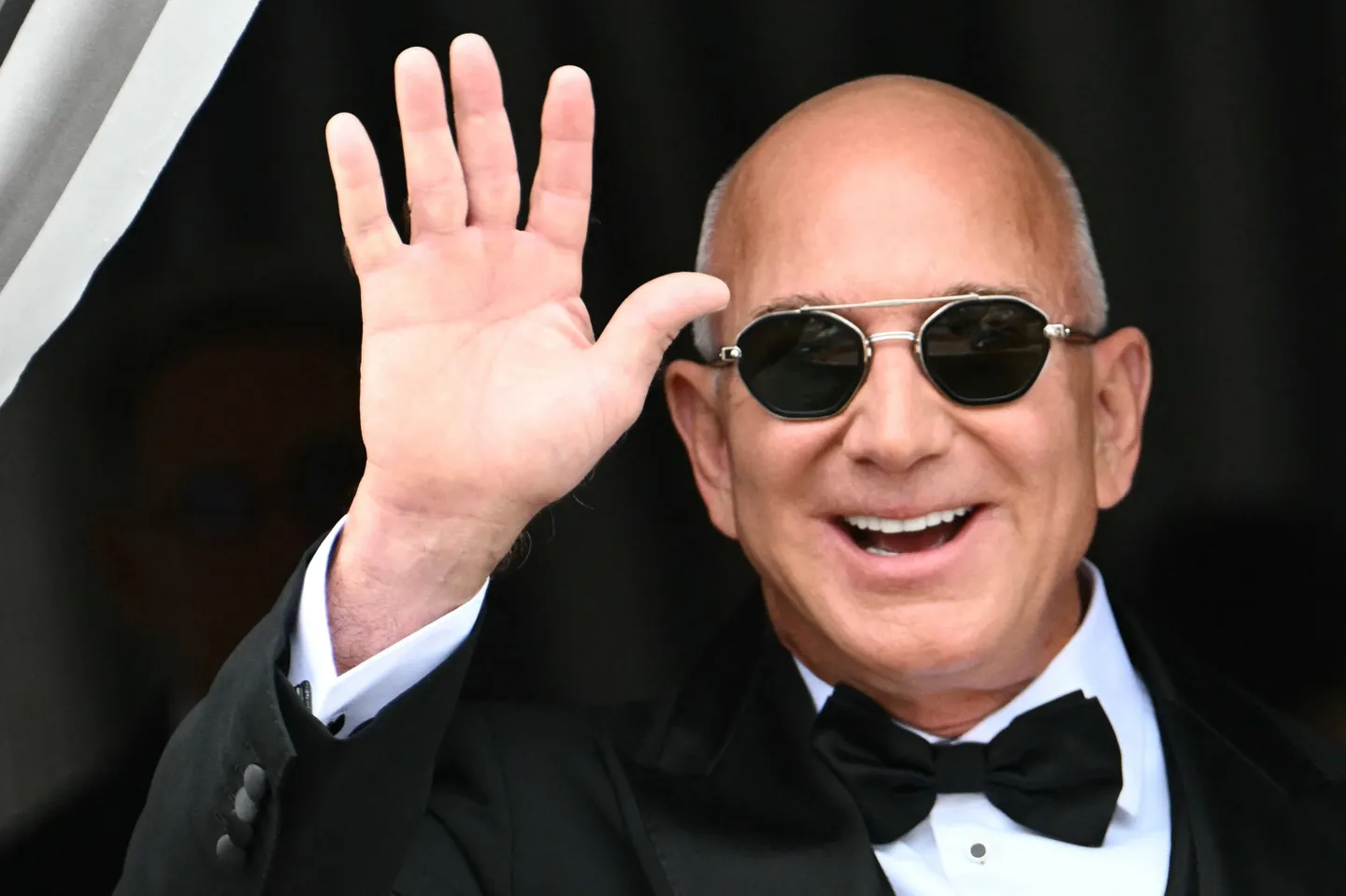
Jeff Bezos is calling for a major change to the U.S. tax system: the bottom half of American income earners should pay zero federal income tax. He argues that lower- and middle-income workers contribute only a small portion of total federal income-tax revenue while facing significant financial pressure of their own.
For workers earning around $75,000, Bezos says the difference could be substantial. He specifically pointed to a hypothetical nurse in Queens and questioned why someone earning that amount should be paying more than $1,000 a month in taxes.
The proposal could eventually affect roughly 76 million American households, although Bezos has not laid out a detailed plan explaining exactly how the exemption would work or how the government would replace the lost revenue.
What is Jeff Bezos proposing on income taxes?
Bezos’s proposal is straightforward in principle: the bottom 50% of U.S. earners should pay no federal income tax.
His argument is based partly on how much tax revenue comes from different income groups. According to tax data cited in the source material, the bottom half of taxpayers accounted for roughly 12% of total adjusted gross income in 2023 but paid only about 3% of all federal income taxes.
Bezos argues that this relatively small contribution means eliminating federal income taxes for the group would represent a comparatively small cost to the government while potentially providing meaningful relief to millions of households.
“The bottom half of income earners in this country pay only 3% of the taxes,” Bezos said. “I think it should be zero.”
His proposal focuses specifically on income tax, rather than suggesting that lower-income workers should stop paying every type of tax.
That distinction matters because American workers can face several different taxes on their earnings, including:
- Federal income tax
- Social Security taxes
- Medicare taxes
- State income taxes in many states
As a result, eliminating federal income tax would not necessarily mean a worker’s entire tax bill disappears.
Why does Bezos think lower earners should pay zero income tax?
Bezos’s central argument is that workers at lower income levels are already under significant financial pressure, and the amount they contribute to federal income-tax revenue is relatively small.
He illustrated the point with a hypothetical nurse in Queens earning $75,000 a year.
“Why is a nurse in Queens who makes $75,000 a year paying more than $1,000 a month in taxes?” Bezos asked.
He argued that the government should not be asking that worker to send money to Washington and said the government should instead be apologizing to her.
The broader idea is that tax policy should take into account how much disposable income workers have available after meeting everyday expenses.
Bezos also said he intends to advocate for the idea with political leaders. He described the proposal as something citizens and business leaders should be willing to bring forward as part of a broader policy discussion.
How much federal income tax does the bottom half currently pay?
The source material provides a useful picture of the existing system.
In 2023, taxpayers in the bottom half—roughly those earning under $54,000—accounted for approximately:
- 12% of total adjusted gross income
- 3% of all federal income taxes
- About $913 per year in average federal income tax per household within that group
There is another important detail: once refundable tax credits are taken into account, the bottom 40% of taxpayers already pay effectively no federal income tax on average.
That means Bezos’s proposal would not affect every lower-income household in the same way. For some workers, the change could produce little or no additional benefit because refundable credits already reduce their effective federal income-tax liability to zero.
For households that do pay federal income tax, however, eliminating that liability could provide additional disposable income.
What could zero federal income tax mean for a worker earning $75,000?
A $75,000 annual salary is about $6,250 per month before taxes.
Bezos used a nurse earning that amount to make his argument, suggesting that the worker could be paying more than $1,000 a month in taxes.
However, the source does not provide Bezos’s exact calculation or establish that every worker earning $75,000 pays that precise amount in total taxes.
That distinction is important.
A worker’s actual tax burden depends on multiple factors, including which taxes apply and the individual’s circumstances. Federal income tax is only one component of the broader tax system.
So Bezos’s example is best understood as an illustration of his argument rather than a universal calculation for every $75,000 earner.
If federal income tax were eliminated for qualifying workers, the direct benefit would be the federal income-tax amount they otherwise would have paid. Other payroll and state taxes could still apply.
How does the U.S. progressive tax system fit into Bezos’s argument?
The United States uses a progressive federal income-tax system, meaning higher earners generally pay a larger share of their income in federal income taxes.
The figures from 2023 illustrate the difference between income and taxes paid.
The bottom half of taxpayers represented roughly 12% of adjusted gross income but contributed about 3% of federal income-tax revenue.
At the opposite end, the top 1% of taxpayers accounted for nearly 21% of total adjusted gross income while paying roughly 38% of all federal income taxes.
That difference is at the center of the debate Bezos is entering.
His position is not simply that wealthy Americans should pay less. He acknowledged that people can disagree over what constitutes a fair tax burden for high earners and described that question as a legitimate policy debate.
Instead, his argument is that eliminating federal income taxes for the bottom half could provide meaningful relief to workers without requiring the government to give up a comparable share of its overall tax revenue.
What would happen to government revenue?
This is one of the biggest unanswered questions surrounding the proposal.
Bezos argued that exempting lower earners from federal income taxes would represent only “a small amount of money for the government.”
The source material does not provide a detailed revenue estimate or a specific replacement mechanism.
That means the proposal, as presented, is primarily a policy position rather than a complete tax-reform plan.
Any implementation would have to address how the federal government would account for the income-tax revenue that would no longer be collected from qualifying households.
Bezos has also argued that simply increasing taxes on wealthy Americans would not necessarily solve what he considers a larger problem: government spending and inefficiency.
Bezos says higher taxes on wealthy Americans would not solve the problem
Bezos’s comments also touched on the other side of the tax debate: whether increasing taxes on the wealthiest Americans would meaningfully improve conditions for ordinary workers.
With an estimated net worth above $280 billion, Bezos is among the world’s wealthiest people. He said he personally pays “billions of dollars” in taxes, while also acknowledging that debates over what wealthy Americans should pay are legitimate.
The source material notes that Bezos’s own tax history has received scrutiny. An investigation released in 2021 found that he paid no federal income tax in 2007 and 2011, with investment losses helping offset reported income in those years.
An analysis of his wealth growth, reported income and taxes paid from 2014 through 2018 calculated a so-called true tax rate of 0.98%.
Bezos nevertheless argued that the debate should focus less on personal attacks and more on policy.
“We can argue about what the fair share is. That’s a policy debate, that’s okay,” he said. “But the vilification is the thing that’s just the distraction.”
His broader point is that increasing the tax bill of extremely wealthy individuals would not automatically solve problems affecting workers.
Bezos argues government spending matters as much as tax rates
Bezos also pointed to inefficiencies in New York City’s public school system as an example of what he sees as a spending problem.
He compared the way the school system operates with the way a large business would operate, arguing that inefficiency can undermine the value of additional funding.
His basic argument is that even substantially increasing the amount he personally pays in taxes would not necessarily translate into better outcomes for individual workers or teachers.
The point adds another dimension to his proposal.
Rather than focusing exclusively on who should pay more, Bezos is arguing that policymakers should also consider how government money is spent.
That distinction is central to his broader position: lowering taxes on the bottom half of earners, combined with more effective government spending, could potentially do more for ordinary Americans than simply raising taxes on the wealthy.
The proposal therefore sits within a much larger debate over taxation, government spending and the distribution of wealth.
Bezos says he plans to give away most of his wealth
Tax policy is not the only area where Bezos has discussed how his enormous fortune could affect society.
He has said he intends to give away most of his wealth during his lifetime, although he has acknowledged that effective philanthropy is difficult.
The source material also highlights the philanthropic activity of his former wife, MacKenzie Scott. Since 2020, she has donated more than $26 billion to organizations focused on areas including diversity, equity and inclusion, education, and disaster recovery.
Bezos and his current wife, Lauren Sánchez Bezos, have donated an estimated $4.7 billion over their lifetimes, according to the figures cited in the source.
Bezos has not committed to the philanthropic initiative associated with several other billionaires that encourages wealthy individuals to give away the majority of their fortunes during their lifetimes or through their wills.
Instead, he has described his own intention to distribute most of his wealth while acknowledging the difficulty of ensuring that large-scale philanthropy has the greatest possible impact.
Bezos says entrepreneurship can create lasting social value
Bezos also sees business creation itself as a form of societal impact.
He argued that successful companies can improve people’s lives by creating products and services that customers value.
His message to aspiring entrepreneurs is to focus on creating value for customers. In his view, a successful business can generate a broader social benefit by solving problems and providing products or services that people genuinely want.
That philosophy provides context for his views on taxation.
Bezos is not arguing only for a different distribution of taxes. He is also making a broader argument about how wealth, entrepreneurship, government spending and social impact should interact.
Could Bezos’s proposal actually save workers thousands of dollars?
Potentially, for workers who currently owe federal income tax, but the exact savings would depend on their individual tax situation.
Bezos suggested that a nurse earning $75,000 could be paying more than $1,000 per month in taxes, but he did not provide detailed calculations explaining how he arrived at that figure.
The source also makes clear that workers generally pay several different types of taxes.
Therefore, eliminating federal income tax would not necessarily put the entire tax bill back into a worker’s paycheck.
The potential benefit would be limited to the federal income-tax liability covered by the proposed exemption.
For some lower-income households, the impact could be smaller because refundable tax credits already reduce effective federal income-tax payments to zero.
For others who currently pay federal income tax, the savings could be more noticeable.
The bigger question: who should pay taxes in America?
Bezos’s proposal raises a fundamental question about the purpose of the tax system.
Should the lowest-earning half of taxpayers contribute something toward federal income taxes if they represent a relatively small portion of total tax revenue? Or should the federal income-tax burden be concentrated more heavily among higher earners?
The numbers cited in the source show why the question is politically significant.
The bottom half of taxpayers accounted for roughly 3% of federal income-tax payments in 2023. The top 1%, meanwhile, paid about 38%.
That does not settle the question of what is fair. But it does show that the federal income-tax system already places substantially more of the burden on higher-income taxpayers.
Bezos’s proposal would push that principle further by removing federal income-tax liability altogether for the bottom half.
The challenge is determining where the cutoff would fall, how eligibility would be calculated and how the government would account for the resulting reduction in revenue.
Those details were not provided in Bezos’s comments described in the source material.
What Bezos’s tax proposal means for ordinary workers
For households trying to manage rising expenses, the attraction of the proposal is easy to understand: if a worker no longer had to pay federal income tax, more of each paycheck could remain available for everyday spending or saving.
But the proposal should not be interpreted as a promise that workers earning below a certain amount would suddenly stop paying all taxes.
Social Security and Medicare taxes could still apply, and state income taxes could remain in place where applicable.
The proposal also remains a policy idea rather than an enacted change.
For now, the most significant development is that Bezos says he intends to advocate for the idea with political leaders.
His argument is built around a simple premise: the bottom half of earners contributes only a small share of federal income-tax revenue, yet those workers may feel the financial burden of taxation more acutely than wealthier households.
Whether policymakers agree is a much larger question.
The takeaway for taxpayers
Bezos’s proposal would eliminate federal income taxes for the bottom half of U.S. earners if it were adopted, potentially affecting roughly 76 million households. But the proposal does not mean every lower-income worker would stop paying taxes, and the source does not provide a detailed plan for implementation or revenue replacement.
For workers, the key issue is therefore not simply whether the proposal sounds attractive. It is how eligibility would be defined, how much federal income tax an individual currently pays, and whether the policy would ultimately become law.
Until those details are established, the proposal remains an argument for changing how the U.S. tax burden is distributed—not a change workers can currently apply to their paychecks.
Disclaimer: This article is for informational purposes only and does not constitute financial, investment, or tax advice. Always consult a qualified professional before making financial decisions.